| ACADEMIC LECTURENanjing Audit University · Institute of Economics and Finance |
|
| On the afternoon of 2 November, Associate Professor Lin Yong of Birmingham Business School and Ms Fei Feifei, Project Manager of the University of Birmingham's China Office, visited the Institute. In Room 912 of the Comprehensive Building on the Mochou Campus, they gave a special lecture to students on the Economics programme, a China-UK joint programme with mutual credit recognition. Before the class began, Ms Fei gave a systematic briefing on the curriculum, entry requirements and career prospects of Birmingham's business and finance-related degrees. Mr Lin then taught supply chain management through an authentic Taster Lecture from Birmingham Business School. |
| Time | Afternoon of 2 November | | Venue | Room 912, Comprehensive Building, Mochou Campus | | Speaker | Lin Yong (Associate Professor, Birmingham Business School) | | Also speaking | Fei Feifei (Project Manager, University of Birmingham China Office) |
|
|
| Before the Class: How to Apply to Birmingham |
|
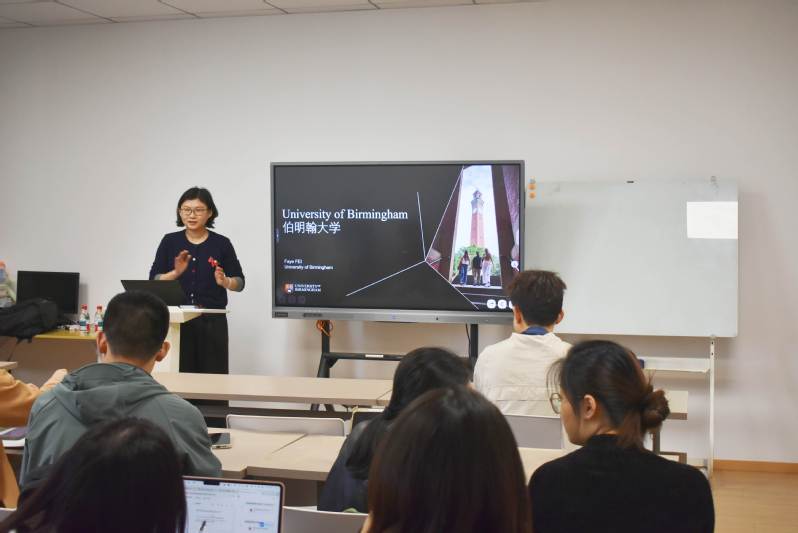
| Before the lecture proper, Ms Fei introduced the University of Birmingham's history and campus life, focusing on the curriculum, credit-recognition standards, entry requirements and career prospects of the business school and its related business and finance programmes. Drawing on the actual progress of the China-UK cohort, she offered tailored advice on module selection, English language scores and application timelines. She reminded students that applying through the credit-recognition programme is not a last-minute effort: academic performance, language ability and programme fit need to be built up from the early years. Responding to students' concerns about transitioning to study abroad and returning to work in China, she also introduced the career support the University of Birmingham offers Chinese students.
|
| The Taster Lecture: Why Supply Chain Matters |
|
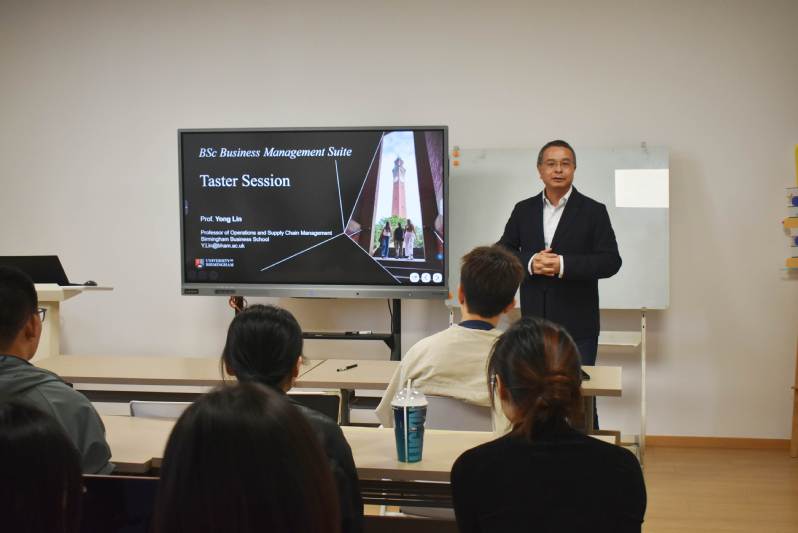
| The class began with a question: among the top ten companies on the 2026 Fortune Global 500, which ones have secured their position through supply chains? Using Amazon, Walmart, Apple and McKesson as examples, Mr Lin asked students to consider what made them successful. After unpacking Apple's innovation and design, brand culture, marketing positioning, leadership and competitive strategy one by one, he brought the discussion back to a single phrase: supply chain. Half of Apple's success, he suggested, is written into its products; the other half into the chain that delivers hundreds of millions of devices to users on time.Mr Lin then organised the lecture around four questions: what a supply chain is, why it matters, how far supply chain management extends, and where it is heading. Using the chain from supplier to manufacturer, distributor, retailer and consumer, he set out the basic structure of supply chains and the pressures companies now share: geopolitics and export controls, de-globalisation and regionalisation, post-pandemic supply and demand shocks, cost volatility, and customers' higher expectations for speed, transparency and sustainability. "Competition today is no longer between companies; it is between supply chains." He went on to describe three shifts under way in supply chain management: from corporate efficiency to resilience, sustainability and legitimacy; from competition between firms to competition between ecosystems; and the digital transformation of supply chains. These judgements draw on his recent research in journals including International Journal of Operations & Production Management and Long Range Planning, and gave students a more concrete sense of what a Birmingham Business School class and research agenda look like.
|
| The Economics programme, a China-UK joint programme with mutual credit recognition, is an international cooperative education programme run by the Institute and the University of Birmingham. By covering applications first and then moving into the classroom, the lecture gave students a clear view of the application pathway and an early taste of overseas teaching. In recent years the two universities have continued to align curricula and exchange faculty and students under the credit-recognition programme, and taster lectures and application guidance of this kind have become a regular part of talent development on the programme. |
| Text: Tang Jing | Institute of Economics and Finance, Nanjing Audit University | IEF · LECTURE |
|
