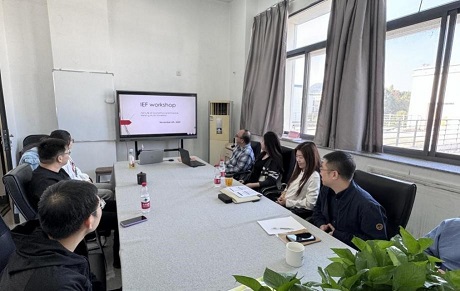
On the afternoon of 6 November, the Institute of Economics and Finance successfully held its first IEF Workshop of the 2024–2025 academic year in Meeting Room 414 of the Minzhi Building, attracting a number of experts and scholars from within and beyond the Institute. The workshop covered five recent academic papers, addressing hot topics across economics and finance including monetary and financial policy, population policy, quantitative investment analysis, and corporate and government financing.
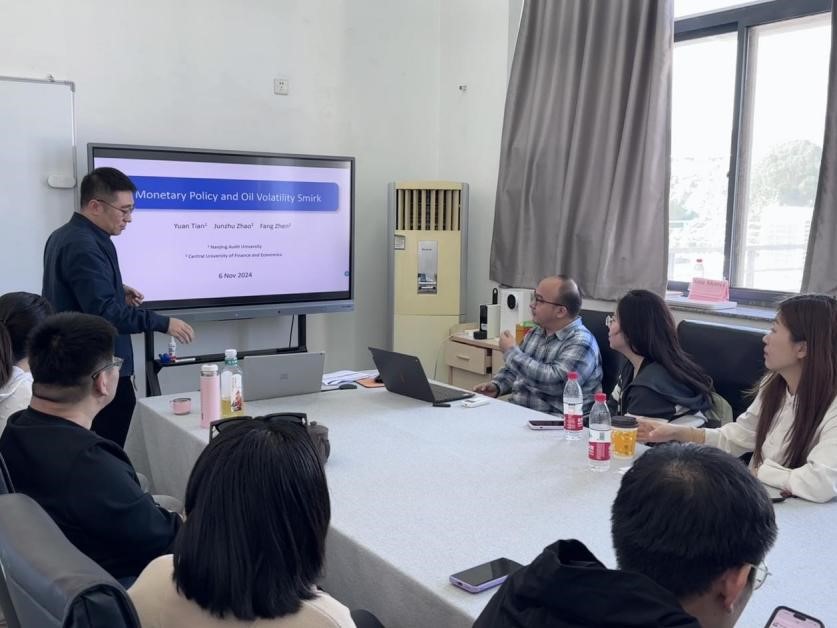
Tian Yuan presented "Monetary Policy and Oil Volatility Smirk". The paper examined the impact of US Federal Reserve monetary policy shocks on crude oil market volatility from 2007 to 2023, finding that contractionary monetary policy shocks can generate crude oil market risk, and that the effects of expansionary and contractionary monetary policy shocks on crude oil market risk are asymmetric.
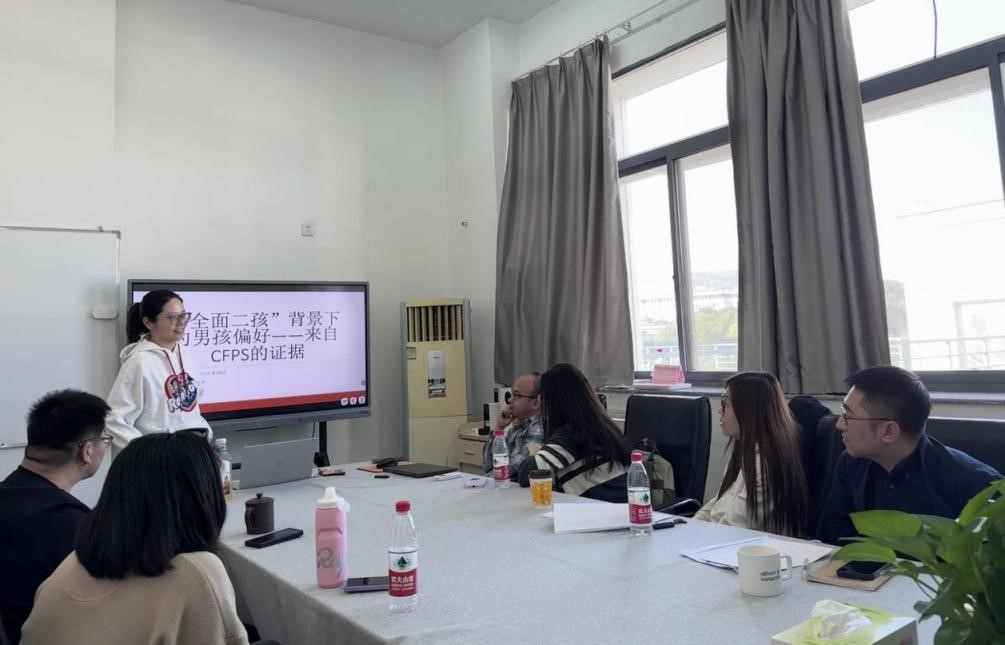
Liu Xiao presented "Son Preference in the Context of the Universal Two-Child Policy: Evidence from the CFPS". The paper studied household fertility behaviour and son preference in China following the universal two-child policy.
Liu Lanlan presented "Divergence of opinion, the resolution of uncertainty and stock market reaction to earnings news", conducting an in-depth investigation into the role and mechanisms of investor belief revision and the resolution of uncertainty in stock price reactions around corporate earnings announcements.
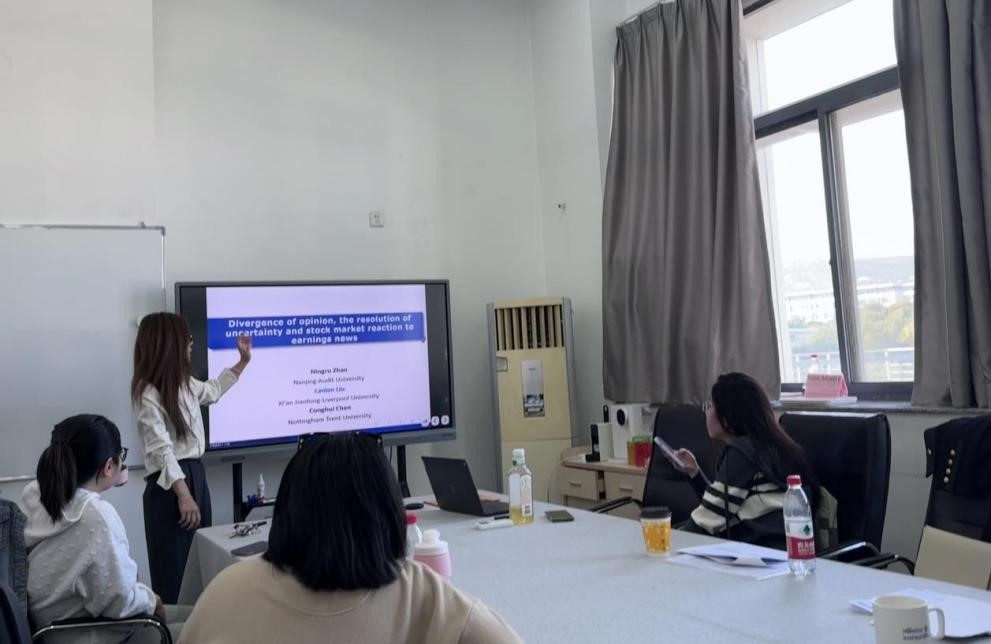
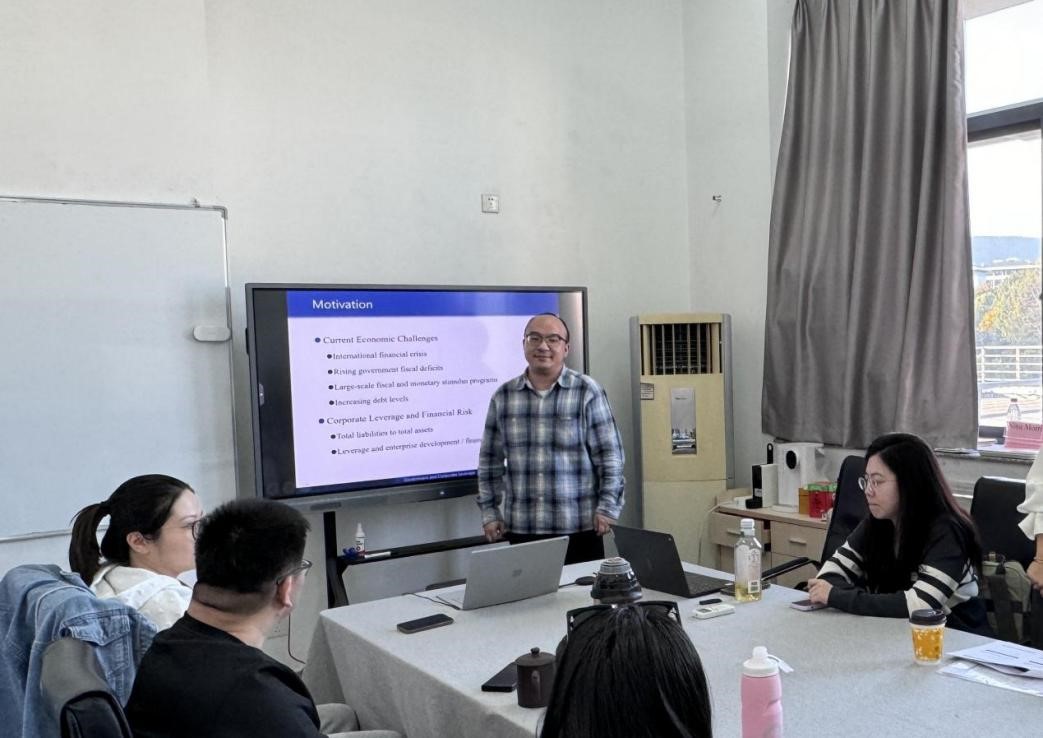
Peng Langchuan presented "Government and Corporate Leverage Across Diverse Sectors", exploring in depth how local government bond issuance affects firms' financing difficulty.
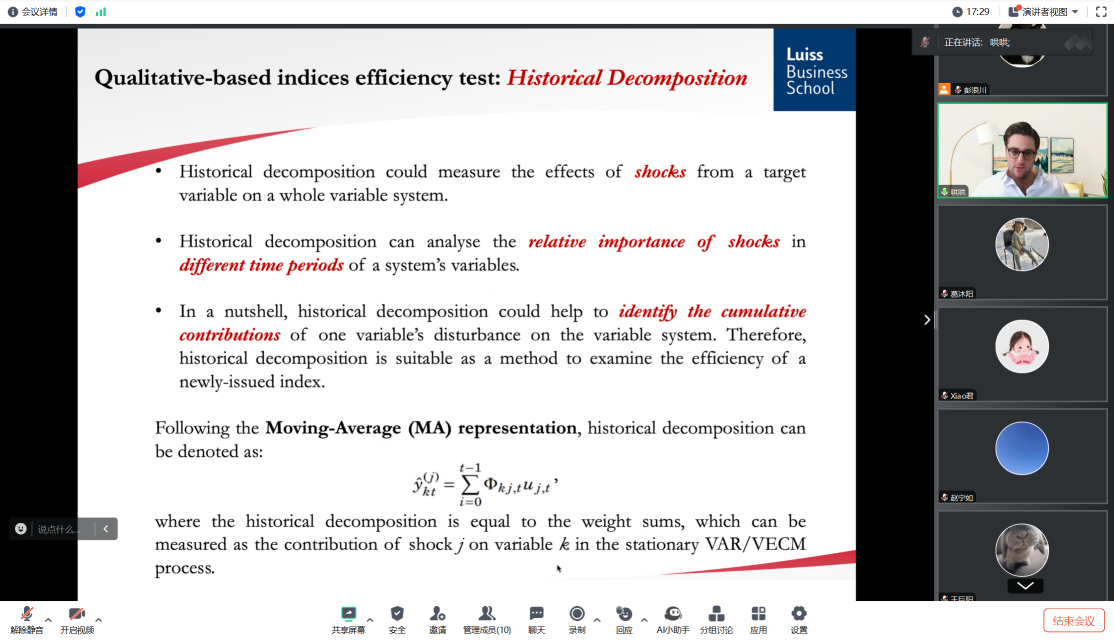
Finally, all participants listened online to a special lecture by Professor Samuel A. Vigne of Luiss Business School. Professor Vigne gave a detailed introduction to the current state of frontier academic research in the field of NFTs and outlined future research directions. During the discussion session, Professor Vigne engaged in in-depth exchange with the faculty members, jointly exploring related issues.