| INTERNATIONAL EXCHANGENanjing Audit University · Institute of Economics and Finance |
|
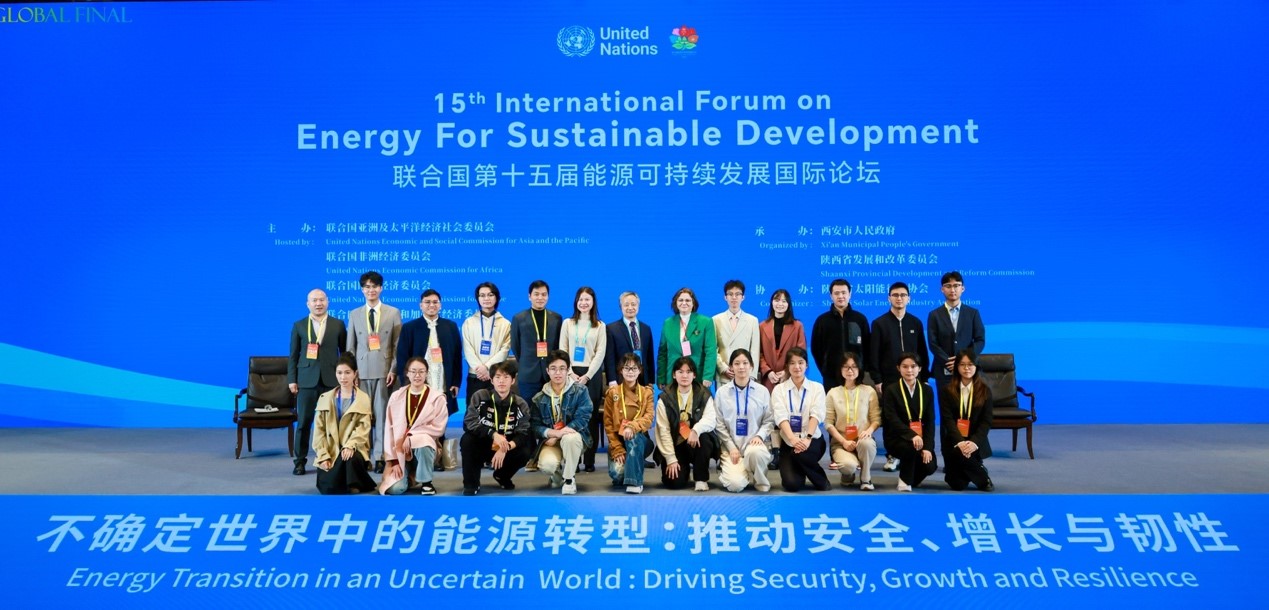
| On 5 November, the 15th International Forum on Energy for Sustainable Development (IFESD15) and the Global Final of the ISETS-ESCAP Youth Voice competition on the energy transition concluded successfully in Xi'an, China. The Forum was co-hosted by the five United Nations regional commissions and organised by the Xi'an Municipal People's Government and the Shaanxi Provincial Development and Reform Commission, bringing together government representatives, heads of international organisations, energy companies and academics to discuss the global energy transition, policy pathways and governance cooperation. The Youth Voice Global Final, held alongside the Forum, gathered young contestants from different countries and regions; through project presentations and on-site defences, they set out how their generation is thinking about, and innovating for, the challenges of the energy transition. |
| Time | 5 November | | Venue | Xi'an, China | | Event | The 15th International Forum on Energy for Sustainable Development (IFESD15) and the Global Final of the ISETS-ESCAP Youth Voice Competition | | Host | The five United Nations regional commissions | | Organisers | Xi'an Municipal People's Government; Shaanxi Provincial Development and Reform Commission | | Participants | The IEF volunteer team, Nanjing Audit University (two supervising teachers and four students) |
|
|
|
| Delegates at the 15th International Forum on Energy for Sustainable Development (IFESD15) |
| Eleven Months of Sustained Commitment: From Preparation Behind the Scenes to the International Arena |
|
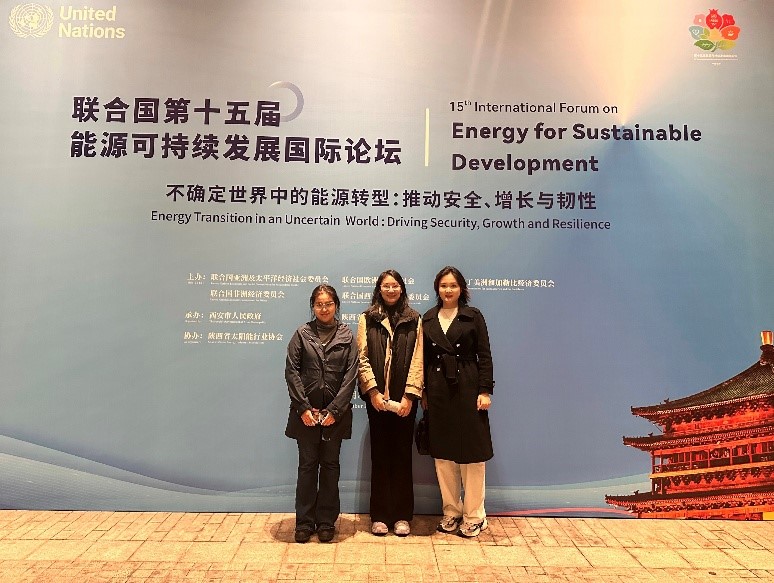
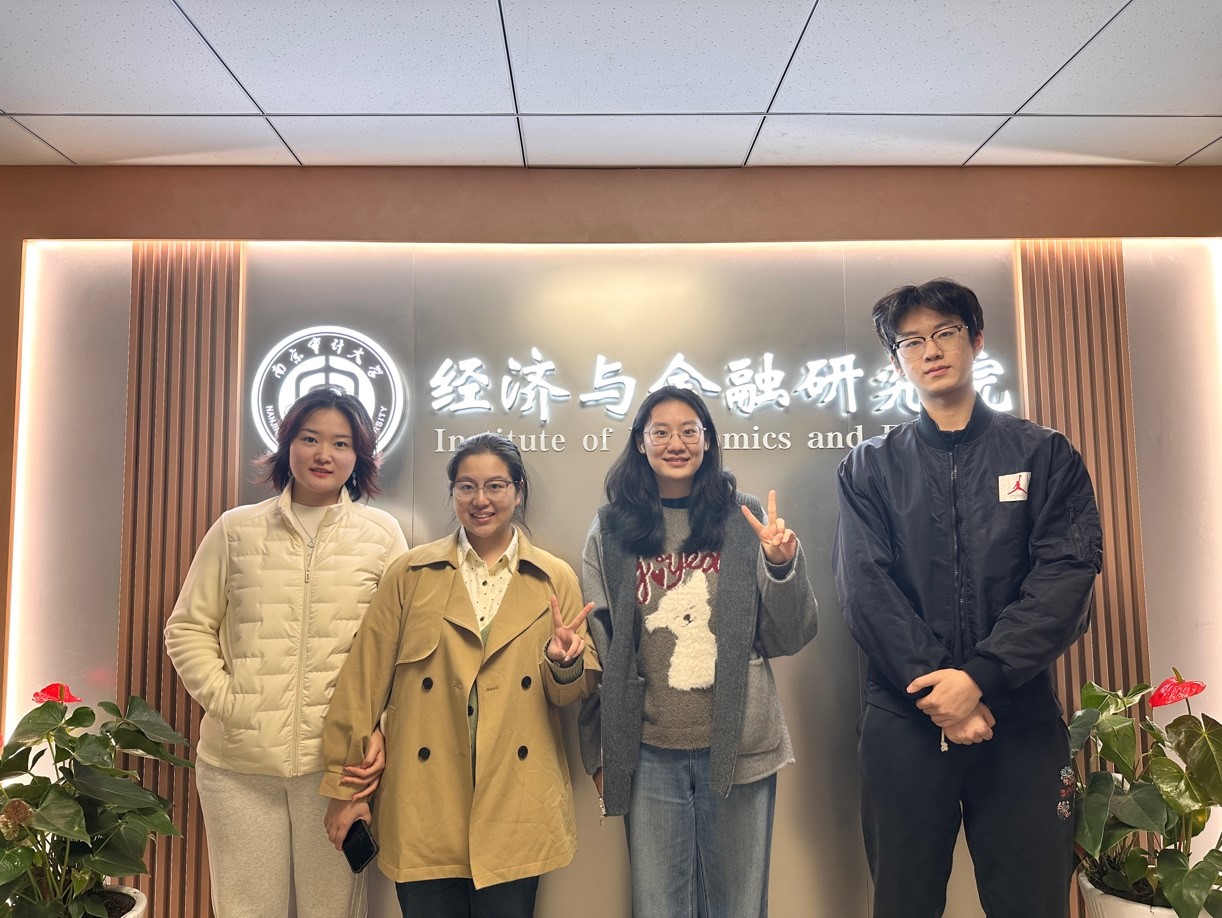
| The Institute of Economics and Finance (IEF) at Nanjing Audit University sent a volunteer team to support the preparation and delivery of the Forum and the Youth Voice competition, working alongside volunteers from Southwestern University of Finance and Economics, Nanjing University of Aeronautics and Astronautics, Shandong Technology and Business University and other institutions to ensure that the events ran smoothly. The team comprised two supervising teachers, Guo Huanxiu and Yue Xuanyu, and four students: Liu Yanzi, Li Tingyao, Li Zimu and Li Ziyu. From the first rounds of email correspondence during preparation to the close of the Global Final, the team was involved for eleven months. |
|
| In front of house, Liu Yanzi and Li Tingyao co-hosted the Youth Voice Global Final together with Karmenova Dilnaza, a volunteer from Kazakhstan, while Li Ziyu handled competition timing and on-site support. Behind the scenes, the four students split into a liaison group and an operations group responsible for the day-to-day running of the competition. The liaison group dealt with contestants and judges from around the world, email communication, review scheduling and the distribution of entries, and helped draft the competition rules, the contestant guide and promotional copy; the operations group managed contestant information, archived entries, verified visa documents, organised travel and reimbursement records, and compiled the competition schedule and results. |
|
| Beyond competition duties, the IEF volunteers also took part in the Forum's wider programme: they spoke with a Nobel Peace Prize laureate, exchanged views with United Nations project officials and UN youth representatives, and joined the international expert meeting on the energy transition as well as a range of cultural events including UN Youth Day. From organising behind the scenes to serving on site, from running a competition to taking part in international exchange, the students developed their organisational, cross-cultural communication and professional skills in a real international conference setting, and deepened their understanding of the energy transition and global governance. |
| Taking the Classroom to International Organisations: Training Talent for International Bodies in Real Settings |
|
| Since 2025, IEF has sent student volunteers to major United Nations events for two consecutive years. The two years of practice reflect the Institute's continuing exploration of how to train talent for international organisations. Internationalisation is a defining feature of IEF's approach to education. Drawing on its international academic exchange and cooperation network, the Institute weaves international rules, cross-cultural communication, multilateral procedures and global governance issues into teaching and practice, working to bridge the boundary between classroom learning and hands-on experience in international organisations. Students are expected not only to master foreign languages but also to understand international rules, be familiar with how international organisations operate, and bring their professional knowledge to bear on international affairs. |
| At UN events, students are no longer merely observers in the audience: as volunteers they take on specific roles, including moderating sessions, liaising and coordinating, receiving guests, organising meetings and providing on-site services. They observe how multilateral meetings actually run, learn how international affairs are communicated through cross-cultural collaboration, and turn what they have learned in class into the practical ability to take part in global governance. This is an important step in IEF's internationalisation, from knowledge acquisition towards real-world settings and from language proficiency towards professional participation. |
| From bringing students to the venues of international organisations to its master's programme for future international civil servants, IEF is linking the training of internationalised talent more closely to global issues and international cooperation. This gives young students a practical platform for engaging in global governance, and opens new space for Chinese universities to take part in international cooperation on education for sustainable development. Going forward, IEF will continue to expand its international cooperation network and to integrate classroom teaching, talent development and hands-on experience in international organisations, so that more young people from Nanjing Audit University can step onto the international stage, join the global conversation and demonstrate the professionalism and sense of responsibility of Chinese youth in global governance. |
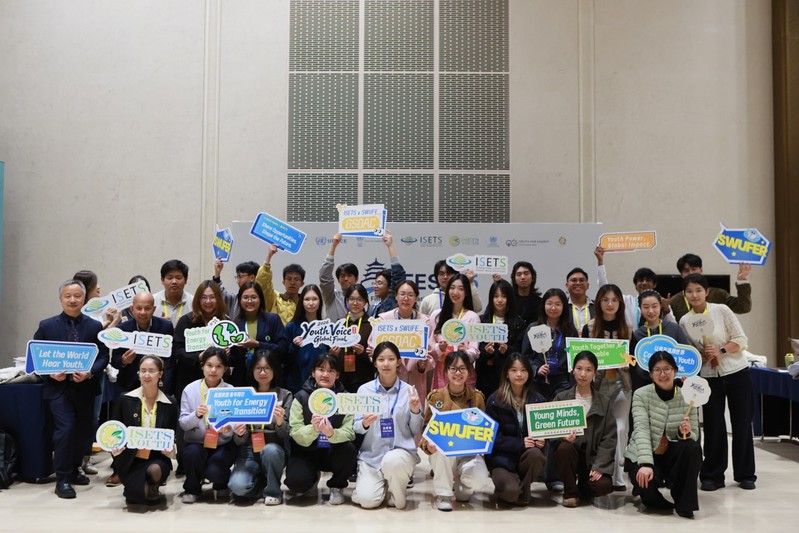 |
| Youth representatives at the Youth Voice Global Final |
| Source: Institute of Economics and Finance, Nanjing Audit University | IEF · INTERNATIONAL |
|
